Daily Supplements
Vitamin D and Magnesium in the Morning Routine of Active Men
Marcus Chen
·
·
9 min read

The relationship between zinc, B vitamins, and daily energy awareness in active men is a subject that appears regularly in the independent nutritional literature and with growing consistency in men's wellness editorial writing. This piece examines the published nutritional evidence on both subjects, the ways in which they are typically combined in men's supplement stacks, and what an evidence-informed editorial perspective on this combination looks like — without the commercial framing that often distorts the conversation.
Zinc contributes to nutritional balance in active men's routines in ways that are documented across independent nutritional sources. Its role in the body spans a range of functions that are relevant to men who exercise regularly: it is involved in protein synthesis processes, in immune function, in the processing of macronutrients, and in a range of enzymatic activities that are foundational to normal physiological function. For active men who are in a significant caloric deficit, or who eat a relatively restricted range of whole foods, zinc represents one of the more common nutritional shortfalls identified in independent dietary research.
The editorial interest in zinc within the men's supplement space has, at various points, been distorted by associations with claims that this journal does not engage with. The editorial focus here is narrower: zinc as a contributor to nutritional balance in active men's routines, with reference to the published nutritional evidence that supports this role. That evidence is substantial enough to place zinc within a thoughtful daily supplement stack, without requiring the kind of exaggerated framing that weakens the credibility of wellness publishing.
Dietary sources of zinc — red meat, shellfish, legumes, seeds, and some whole grains — are accessible for men eating a varied diet, but the research consistently shows that men engaged in regular physical activity may have higher zinc requirements that are not always met through diet alone. This is the practical foundation for zinc's place in the supplement conversation, and it is a foundation built on published nutritional observation rather than editorial enthusiasm.
B vitamins contribute to daily focus and energy awareness in ways that have been consistently documented in independent nutritional research. The B-vitamin complex is not a single compound but a group of eight distinct water-soluble vitamins, each with specific roles in the body's energy-producing processes. For the purposes of the men's supplement conversation, the most editorially prominent members of this group are B12, B6, B2 (riboflavin), and B3 (niacin) — though the complete complex is typically supplemented together, as individual B vitamins do not operate independently from the broader group.
The relevance of B vitamins to daily energy awareness lies in their role in the body's conversion of dietary macronutrients into available energy. This is a foundational biochemical function, and the published nutritional evidence for B vitamins' contribution to normal energy metabolism is among the most well-established in the supplement space. This does not translate into the kind of immediate, dramatic energy effect that commercial supplement marketing sometimes implies — the contribution of B vitamins to energy awareness is one of supporting ongoing nutritional adequacy rather than providing an acute performance stimulus.
For men who eat a varied diet inclusive of animal proteins, B12 deficiency is relatively uncommon. The editorial interest in B12 supplementation has grown in the men's wellness space partly as a reflection of increasing dietary variety among active men — including more plant-forward approaches — and partly as a response to the published evidence showing that B12 absorption from dietary sources decreases with age in ways that become editorially relevant for men in their late thirties and beyond.
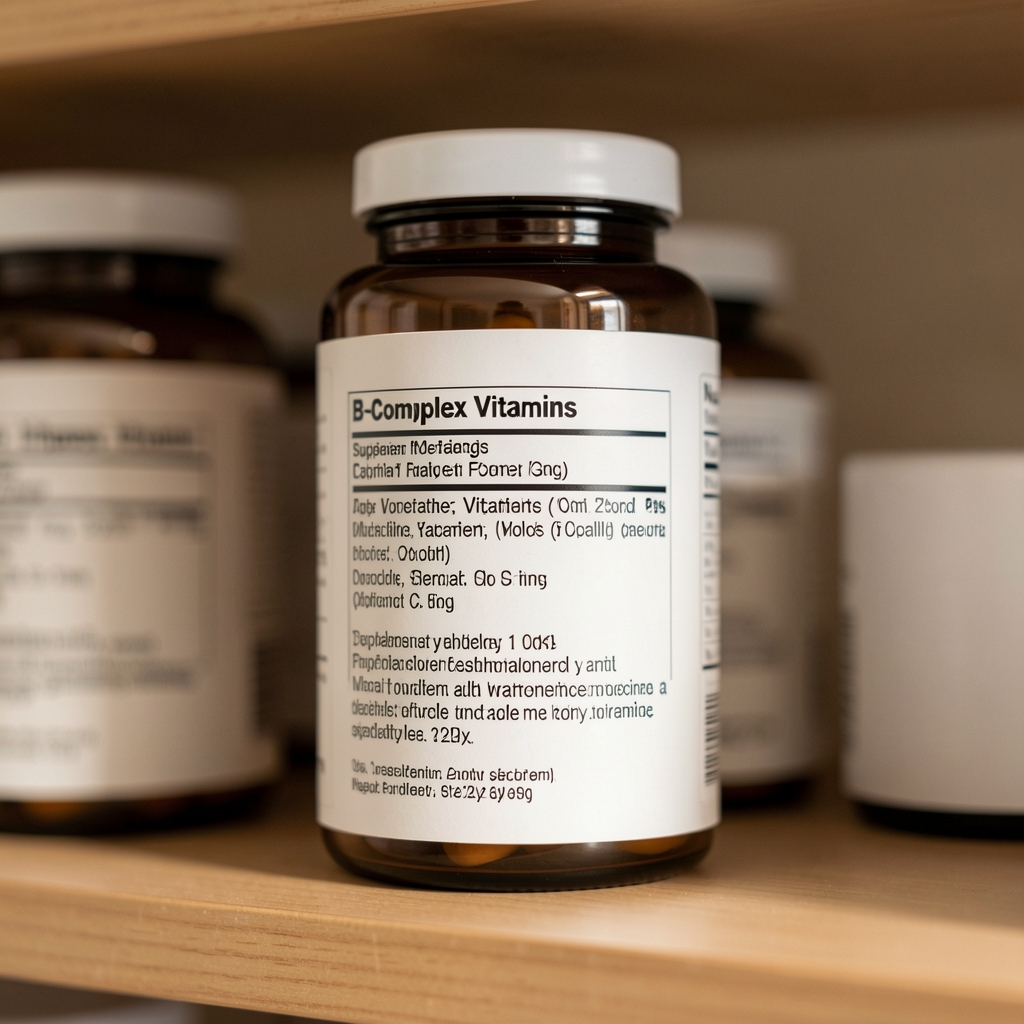
In men's supplement writing, zinc and a B-complex are commonly documented together as part of the daily stack. The practical logic of the pairing is one of nutritional coverage: both address potential shortfalls that are relevant to active men, both are straightforward to take consistently, and neither creates meaningful timing conflicts with other supplements or with meals. The combination does not require specific timing relative to training, making it one of the more flexible additions to a daily routine.
The question of whether to take zinc and B vitamins together or separately is one that editorial writing sometimes addresses with more precision than the available evidence justifies. The relevant practical observation is that B vitamins are water-soluble and do not require dietary fat for absorption, while zinc is most effectively taken with food (and separated from calcium supplementation, which can reduce zinc absorption). These are practical considerations rather than absolute rules, and the independent nutritional literature treats them as modest variables in an otherwise flexible supplementation approach.
In the broader stack context, zinc and B vitamins sit alongside the foundational additions — vitamin D, omega-3, magnesium — without creating complexity. The combined effect of this fuller stack is one of nutritional coverage: addressing the micronutrient shortfalls most commonly observed in active men eating a moderately varied diet, and supporting the daily nutritional patterns that underpin consistent physical activity.
"The case for zinc and B vitamins in the active man's daily stack rests on nutritional coverage — not dramatic effect, but steady, evidence-informed presence."
Any editorial discussion of energy awareness in active men's nutrition eventually encounters iron. Iron contributes to sustained energy awareness in active routines, and its role in oxygen transport is among the most foundational in nutritional science. The editorial conversation around iron in men's supplement writing is complicated by a significant asymmetry: while iron deficiency is a meaningful concern for women, it is less commonly observed in men eating a varied diet inclusive of red meat. At the same time, the research on iron and active men is not without nuance.
Men engaged in endurance activities — distance running, cycling, sustained cardio — have a higher rate of iron loss through various physiological pathways than men focused on resistance training. For this subset of active men, iron status is worth monitoring as part of a broader nutritional awareness practice. The editorial position here is not to recommend supplementation without context, but to note that iron occupies a relevant position in the energy awareness conversation for active men whose activities have a significant endurance component.
The interaction between zinc and iron supplementation is worth noting: high-dose supplementation of either can interfere with the absorption of the other. For men taking both, standard supplemental doses from reputable formulations are unlikely to create significant interaction effects, but the observation is one that editorial writing in this space should document clearly rather than overlook.
The men's wellness editorial record shows zinc and B-complex vitamins occupying a stable, mid-profile position in the supplement conversation. They are not the additions that attract the most commentary — that role belongs to creatine and protein powder in performance-focused writing, and to vitamin D and omega-3 in more general nutritional writing. But they appear consistently across the documented supplement stacks of active men who have built their routines around evidence-informed choices rather than trend-following.
Reza Pratama's own supplement record, which informs this piece, includes a B-complex taken daily in the morning and zinc taken with the evening meal. The separation is a practical choice — evening timing for zinc reduces any potential digestive sensitivity associated with zinc on an empty stomach, and creates a natural separation from the morning stack without requiring any additional planning. It is one documented approach among several that appear in the editorial record of men's nutritional habits.
What the editorial record most consistently shows is that the men whose supplement habits are most coherent are those who have built their stack around a clear nutritional rationale rather than accumulating additions without a framework. Zinc and B vitamins fit naturally within that framework: they address documented nutritional patterns, their evidence base is well-established in independent nutritional literature, and they integrate into the daily routine without complexity. That is a reasonable editorial summary of their place in the active man's supplement conversation.
The practice of supplement journalling — documenting what one takes, when, and with what observations — has a small but consistent presence in the men's wellness editorial space. This journal's interest in the practice is as an editorial form: the supplement journal as a record of intentional nutritional habit, subject to ongoing observation and revision, rather than as a fixed guidance.
For zinc and B vitamins, the journalling practice is straightforward. Both are taken daily; their contribution to nutritional balance is ongoing rather than acute; the markers of their effect are diffuse and long-term rather than immediate. This makes them less dramatic subjects for supplement journalling than creatine or protein, but more reliable ones. They represent the steady, unglamorous middle of the supplement conversation — which is, in this journal's editorial view, exactly where the most defensible nutritional habits tend to live.

Reza Pratama is a Jakarta-based writer focused on men's nutritional awareness and the practical supplement habits of active men. He contributes to ireldon Compendium as an independent voice without commercial affiliation, drawing on his own documented supplement record and the published nutritional literature.
More from the journal

An independent editorial record of daily supplementation habits and nutritional awareness for active men.